
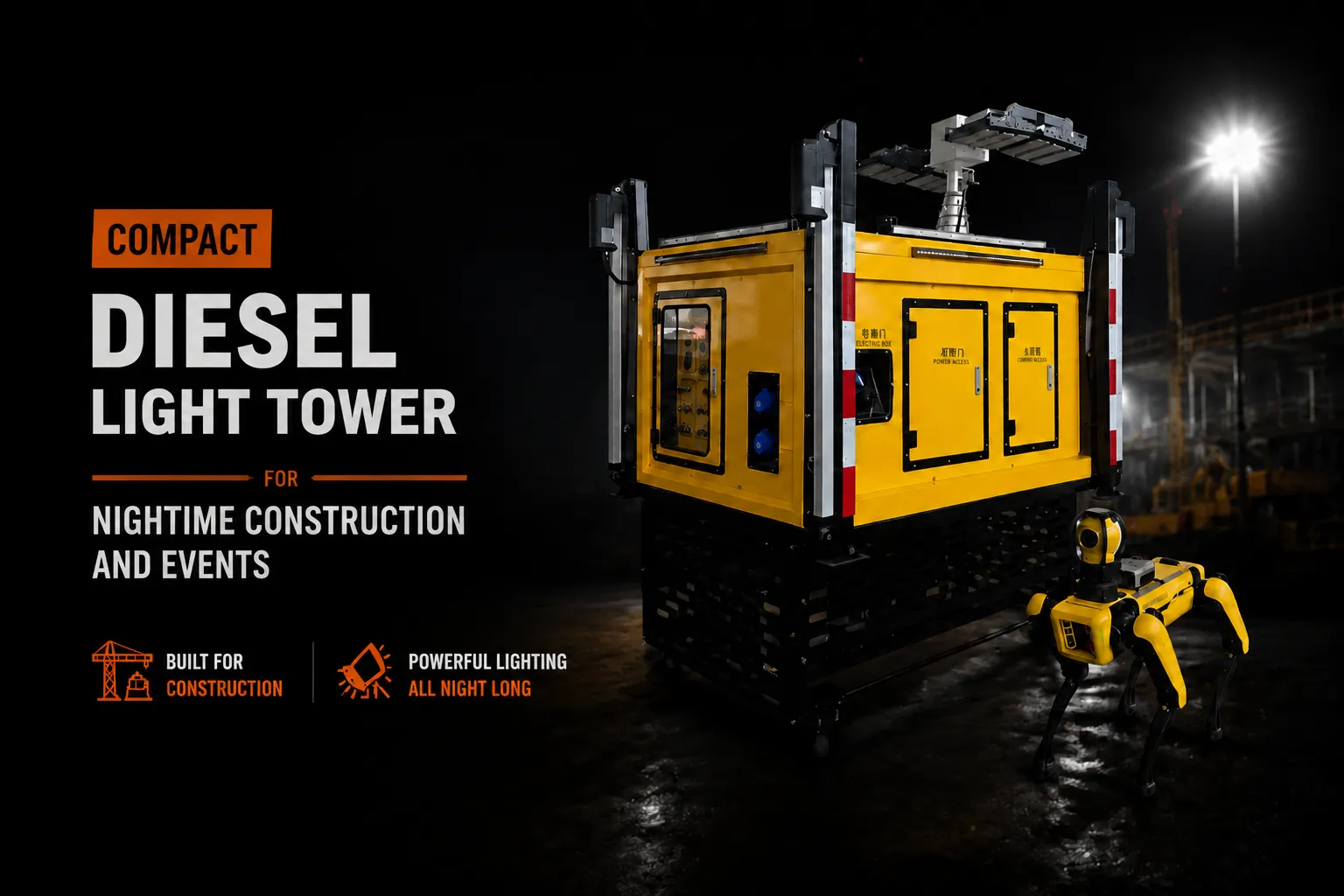
Compact Diesel Light Tower for Nighttime Construction and Events
Night work demands more than effort, it demands reliable visibility. A Diesel Light Tower is one of the fastest ways to light up your job site, support stage operations, or host an outdoor event without relying on unreliable power sources. And when space is at a premium, a compact Diesel Light Tower becomes even more valuable: they are easier to transport; they can be set-up more quickly; and usually do not take up as much space when stored between uses.
Whether you’re managing construction at night; storing equipment at night; filming at night in remote locations; or dealing with large crowds at outdoor events; using portable lighting makes your work safer and provides you with a productive working environment, or provides guests with a higher level of service or experience. In this guide, we’ll discuss what matters most in a compact Diesel Light Tower, what you should look for when searching for a Diesel Light Tower to purchase, and the most frequently asked questions by potential buyers about Diesel Light Towers.
Why a Compact Diesel Light Tower is the Best Choice
Compared to large trailer-type light towers, compact Diesel Light Towers are designed to be portable. They can be easily moved to tight access locations; smaller crews are more apt to move compact light towers than large trailer-type light towers; and set-ups on sites with limited stage area are much simpler with compact light towers.
Key benefits you’ll feel immediately include rapid set-up. Having access to lights before you begin working during daylight hours is important, but relying on a compact light tower can help eliminate the time from arrival of the light tower to having the light tower fully operational (illuminated).
It also improves flexibility. Nighttime construction projects move from one area to another frequently; therefore, light towers designed for being easily portable offer crews the ability to relocate them while performing their job duties.
Finally, you get continuous illumination. Heavy-duty, high-output diesel light towers are popular because they can run autonomously to provide illumination when grid power is unavailable and/or grid power is unreliable.
What Exactly is a Diesel Light Tower and What will it be Used For?
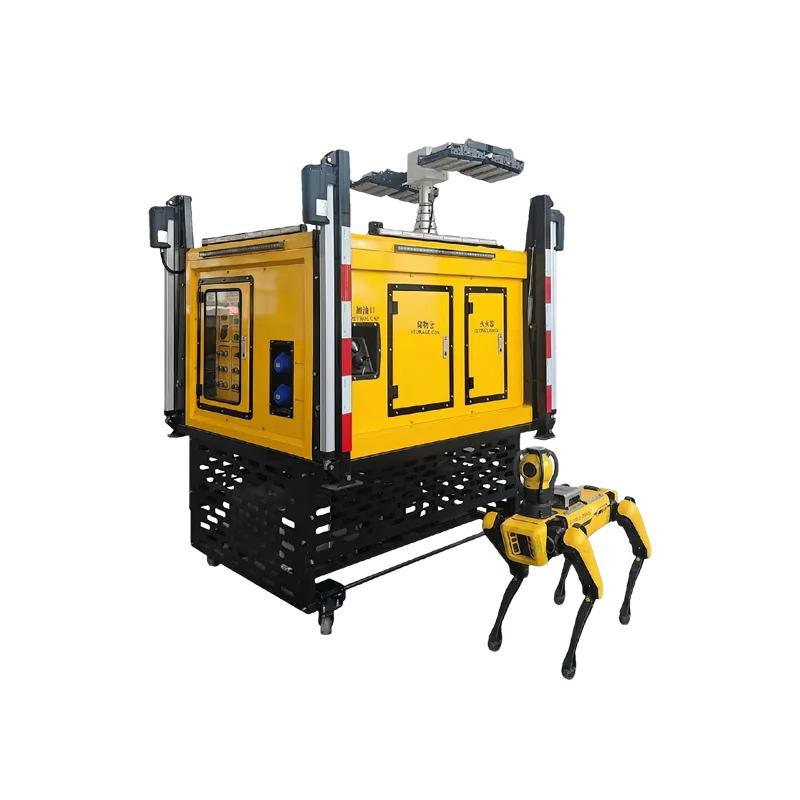
A compact Diesel Light Tower is essentially a self-contained lighting system. It combines a power source and one or more high-output lights (LED or metal halide/high-intensity discharge), typically mounted on a telescoping mast.
You’ll see light tower diesel units used for construction and public works (job sites, bridges, road repair, landscaping), for industrial maintenance (facilities, parking lots, outdoor repair), for events (concerts, festivals, sporting events, temporary VIP areas), for film and photography (design of controlled lighting at multiple shoot locations), and for emergency response and disaster recovery (where immediate coverage is needed).
The “compact” part usually targets situations where you need adequate light without relying on the constant power and larger footprint of big systems—that is, a smaller footprint.
LED vs. Conventional Lamps – Determining Which Light Output is Right for You
Today, the majority of portable diesel light towers are fitted with LED lighting fixtures. LED lights typically start up more quickly, require less energy to operate, and last much longer than other types of lights.
However, some portable diesel light towers still utilize traditional high-discharge (HID/metal halide) lighting. These lights are likely chosen by end users based on pricing only. This decision could depend on exact use times, service schedule, and the need for consistent color production for events or photographs.
If you’re lighting an area for safety and productivity, other factors such as run-time stability and operating efficiency may be more crucial than getting specialized colors. From an event, film, or brand activation perspective, consistent and controllable output can matter just as much.
| Feature | LED Fixtures | Traditional Lamps (e.g., Metal Halide/HID) |
|---|---|---|
| Start-up time | Faster start and more consistency usually occur with LED than with traditional lamps | Will may be much longer after start before reaching full brightness |
| Energy efficiency | More efficient than most traditional lamps and thus increase total run time | Require more total energy usage for equivalent light output of other types of lighting |
| Service life | Longer service life usually than traditional lamp/module | More frequent changing of bulbs/lamps is usually typical with traditional fixtures/lamps |
| Maintenance | LED fixtures will require less frequent maintenance issues over the long term than other types of fixtures | Replacement and maintenance costs can become significant over the lifespan of traditional bulbs/lights |
| Light consistency for events | Create consistent color and output for the duration of long events | Color and output may slightly shift as the bulbs/lights age (without replacement) due to lamp wear |
| Weather and vibration tolerance | Commercial quality LED fixtures that are specifically designed for rugged outdoor use | Although rugged, traditional lamps can be more susceptible to vibrational shock than LED fixtures |
| Upfront cost | Higher upfront costs; however, total operational cost can be decreased compared to traditional bulbs/lights | Lower initial costs; however, total costs to maintain or replace when using traditional bulbs/lights will usually be greater |
Portability and Setup: The Specs that Matter for Practical Usage
When shopping, the most buyer-relevant features are the ones that reduce real-world friction. Consider the means by which the specific unit will be transported and whether or not it can be towed. While most compact towers can be towed with standard equipment, be certain you know the weights and hitch requirements before making a decision.
Next, check mast height and coverage area. Getting height generally provides greater coverage; however, be sure to match the layout of the lamp to your individual needs. Ask yourself: do you need to light up a wide work area, or do you need concentrated brightness in a smaller zone?
Then think about control and aiming. Look for simple controls, and the ability to level and tilt/angle the light if applicable. Make sure that you are able to aim your light where you will be working, especially if you are using existing structures to obtain your lighting needs.
Weather resistance matters too. Night work happens in all conditions. If you are going to be performing work at night and require a light source for the job, then it will need to be weather-resistant. A quality tower will be built for outdoor use with protective housing and weather-rated components.
Finally, consider noise. Depending on where you are working, diesel light towers may not be appropriate if you are working near residential neighborhoods or during quiet events. Choose a model designed for lower sound levels or find out where and when you can operate it to meet local noise ordinances and schedules.
How Long Can A Diesel Light Tower Operate?
This is one of the first questions that buyers typically ask about purchasing diesel light towers, as operating time impacts staffing, scheduling, and logistics. The answer will depend on the size of the engine(s), the output of the generator(s), and how you have lamped it (especially if you are using LEDs).
In general, a compact diesel light tower will operate for several hours on a full tank, with most units typically providing sufficient operational time for at least 1 shift (1 night). To confirm the exact expectation, check the manufacturer’s runtime rating on the specification sheet or catalog of the tower you are purchasing.
Helpful hint: if you are going to have multiple shifts or a long event, confirm both the maximum runtime and the typical runtime under load before making a purchasing decision to avoid surprises. That’s where real-world usage is not the same as ideal conditions.
That being said, fuel capacity determines how long the tower can be used. A common type of light tower has two basic options: compact systems that often have smaller storage tanks compared to larger rental units, and the actual number of gallons of fuel stored varies by model.
When you’re evaluating a diesel light tower for sale listing, locate the stated fuel tank capacity, often located in gallons (or liters). Pair the tank capacity with the estimated run-time so you know when to refuel without disrupting your work schedule.
If you require long-term continuous lighting, also consider refueling logistics: whether diesel is readily available onsite, local storage requirements, and if the tower is easily accessible for refueling.
Buying a Diesel Light Tower: What to Ask Before You Purchase
Before you buy a diesel light tower, there are multiple factors you should consider that go beyond cost. To help mitigate risk, make sure you validate each one of the following before purchase.
First, confirm the lighting type. Verify whether you will use LED lights or traditional lamps, along with confirming wattage and/or lumens for each fixture if available.
Second, ask about generator output. Make sure the generator output matches the lamps you will be using and any optional accessories you may wish to include.
Third, confirm runtime and fuel consumption. Ask for the typical run-time under a loaded condition and confirm the tank’s volume.
Fourth, review maintenance requirements. Understand and verify what type of preventative maintenance is required, including service intervals and whether parts will be easy to obtain from vendors in your area.
Finally, confirm warranties and after-sales support. Quick assistance from a manufacturer or dealer in case of a problem is a high priority for most buyers.
If you are comparing several models of diesel light towers, request a detailed quote listing major components, the method of transporting them, and whether any necessary accessories are included in the price. A well-defined quote will help minimize delays and enable you to stay on schedule.
Safe & Compliant Night Lighting
Night lighting improves safety, but the setup must be done correctly. Ensure you have a stable base for supporting your lighting units, and strictly adhere to the manufacturer’s operating guide(s) for extending the mast and positioning the lamp within the mast structure.
Also, take precautions to avoid glare from the lights used. If your night event has spectators, consider sight lines, appropriate spacing for safety, and how to safely manage any cables if you are using electricity from an outside power source.
Plan decisions regarding environmental factors prior to working in the field. Strong winds can cause large masts to become unstable; therefore, if your work site will be exposed to changing weather patterns, only choose a unit designed for outdoor use with proper leveling every time.
Compact Light Tower Use Cases: Real-Life Examples of Compact Light Tower Uses
If you are currently deciding if a compact unit would be useful in your business, here are some possible uses for a small construction crew’s portable diesel light tower during routine construction operations such as trenching, curing cement-related work, or staging equipment on a job site. They can change their location easily and have a smaller size.
Rental businesses often prefer compact diesel systems for events because it is easy to move them from one venue to another, as well as use them in urban environments where there is limited room.
Diesel light towers can be used by maintenance departments for many different applications such as making parking lot repairs, performing outdoor inspections, or operating generators when the primary power source is out of use or when it is being saved for critical needs.
Photographers and filmmakers typically choose light towers that use LED lights due to increased control, longer operation time, and less lamp downtime.
When shopping for a diesel light tower for sale, check for like-for-like comparisons by reviewing specifications, the manufacturer’s stated run time, and the stated fuel capacity of each unit. If the numbers from a listing are not clearly stated, consider that a potential issue.
Also confirm whether the unit for sale is new or previously used. If used, find out if there are any service records available, what components have been inspected, and what warranty is associated with the unit. A deal that looks good may not be worth the investment of time and money if maintenance parts or generator components need replacement.
Finally, confirm what accessories are included, such as leveling systems, control panel components, protective frames, and any other accessory required to safely operate the unit.
FAQ
How long do diesel light towers last?
For compact diesel light towers the amount of time they will run on a full tank of fuel varies from one manufacturer to another and will also depend on how the diesel light tower is configured, such as engine type, light output (LED vs traditional), and load during operation. Most compact diesel light towers are capable of running for several hours on a full tank. It is always best practice to review the runtime specified by the manufacturer for any diesel light tower you are looking at purchasing.
What is the fuel capacity of a diesel light tower?
Fuel capacity can vary significantly among different models. A compact diesel light tower usually has a smaller tank compared to its larger rental counterpart, but even amongst compact models, fuel tanks can vary considerably. Be sure to look up the total fuel tank capacity of the diesel light tower in either gallons or liters. This will help ensure that you will have adequate fuel supply based on the estimated runtime of the diesel light tower you intend to refuel.
Where to buy a diesel light tower?
Diesel light towers can typically be found for sale from either authorized dealers/distributors, suppliers of industrial equipment, or through rental equipment marketplaces. When looking for suitable models you should focus on listings that provide clearly defined specifications including estimated runtime, total fuel capacity, type of lamp used, and warranty terms.
Who makes portable diesel light towers?
The main difference between portable diesel light towers and standard light towers is that portable models are specifically designed for ease of transport and set up, often being less bulky and easier to handle than standard models. Standard diesel light towers are generally larger and more suited for long-term use on a site or for providing a higher level of light for larger areas.
Will a diesel light tower work for events?
Diesel light towers, especially compact models, are used on a regular basis for outdoor events. Systems using LED lamps are typically used because they provide consistent illumination with relatively low power consumption, and they are critical when trying to establish stable illumination for audiences, stages, and production areas.
In summary, compact diesel light towers are ideal for use by crews and event teams that require immediate access to reliable, consistent, nighttime illumination with high levels of mobility. When evaluating models, focus on fuel tank capacity, expected runtime, lamp type, coverage area, stability for set up, and warranty support. By comparing products and evaluating plans for refueling during operation, you will select equipment that will ultimately improve safety and help you meet your project schedules.