
4000W Solar Light Tower Vs 1000W Solar Light Tower
Deciding on either a 4000W solar light tower or a 1000W solar light tower involves more than simply selecting the bigger or brighter unit. Determining which option will best meet your needs depends on several factors, including the size of the area where illumination is needed, the amount of brightness required, the number of hours of operation, site conditions, your budget, and how often the unit needs to be moved. For contractors, mining operations, event organizers, road crews, and rental facilities, understanding the differences between each option can save money while ensuring safe and reliable lighting quality.
The 1000 watt light tower is typically suitable for applications that require low to moderate duty cycles, with a high degree of portability, strong energy efficiency, and a moderate cost. The 4000W solar light tower is designed for use in large worksite areas or where high-intensity light and heavy industrial usage are required. This product comparison provides a detailed overview to help you make an informed purchasing decision.
Quick Comparison of 4000W Solar Light Tower and 1000W Solar Light Tower
The primary difference between a 4000W solar light tower versus a 1000W solar light tower is the amount of lighting each tower produces. A 4000 watt lamp can provide illumination for a much larger area than most 1000 watt units can. The 1000 watt model is generally less expensive and is a more practical size for temporary work locations or special events. It is also easier to set up and take down, and will usually cost less to run.
| Comparison Criteria | 1000watt Solar Lighting Tower | 4000watt Solar Lighting Tower |
|---|---|---|
| Best-used for | Small to medium applications, short-term jobs, special events, security | Large construction jobs, mining, highways, industrial areas |
| Illumination Area | Moderate area illuminated | Illuminates a large area |
| Power Needs | Requires lower power usage | Requires considerably more power |
| Size of batteries and Solar Panels | Smaller size batteries/solar panels needed | Larger size batteries/solar panels needed |
| Mobility Options | Easier to move and set up | Heavier to move, but good for heavier-duty applications |
| Initial Cost | Lower Cost | Higher Cost |
| Typical Purchaser | Rental companies, city or county workers, farmers, small contractors | Large contractors, mine owners, port managers, and municipalities managing large infrastructure projects |
What is a 1000watt Solar Lighting Tower?
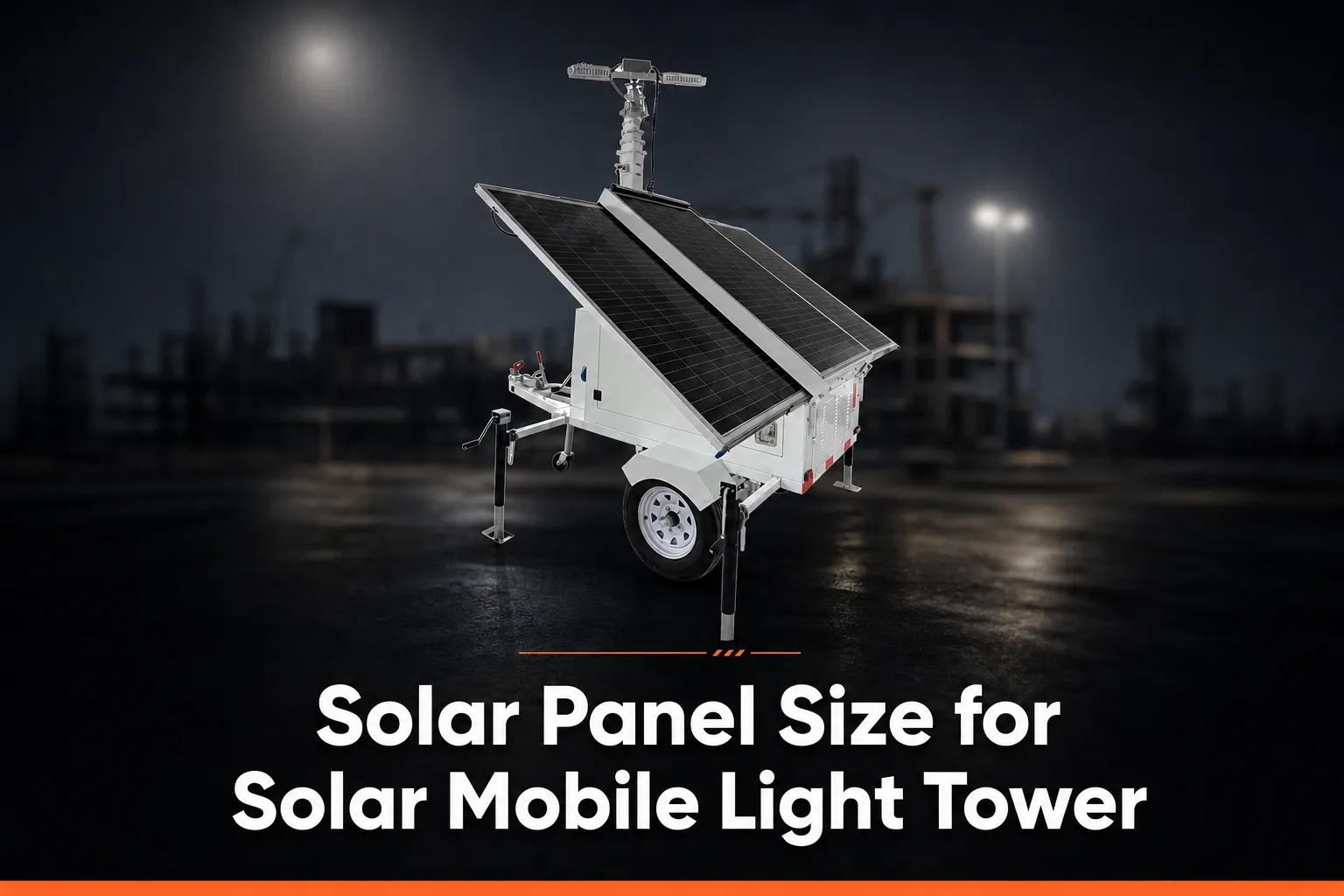
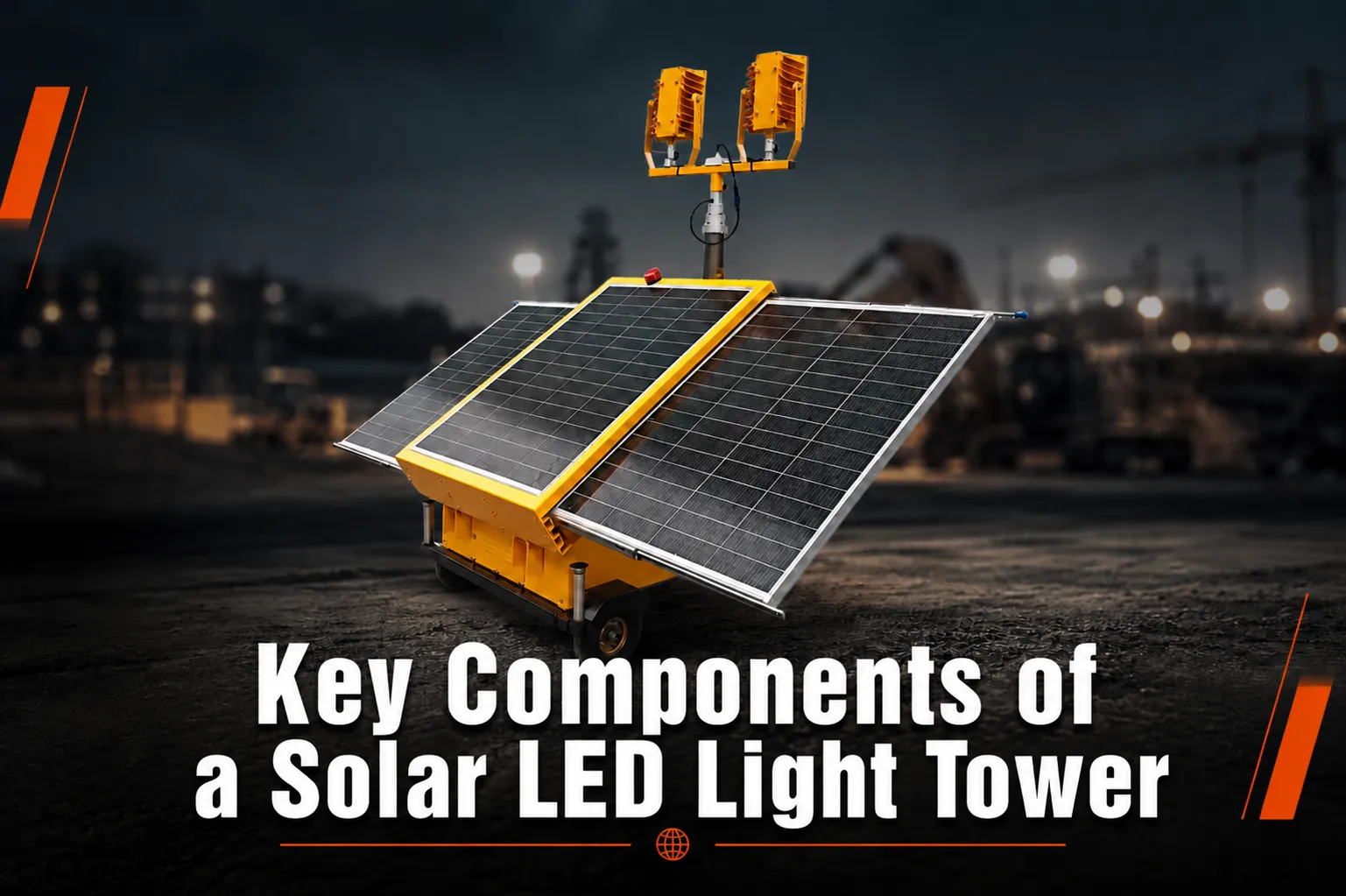
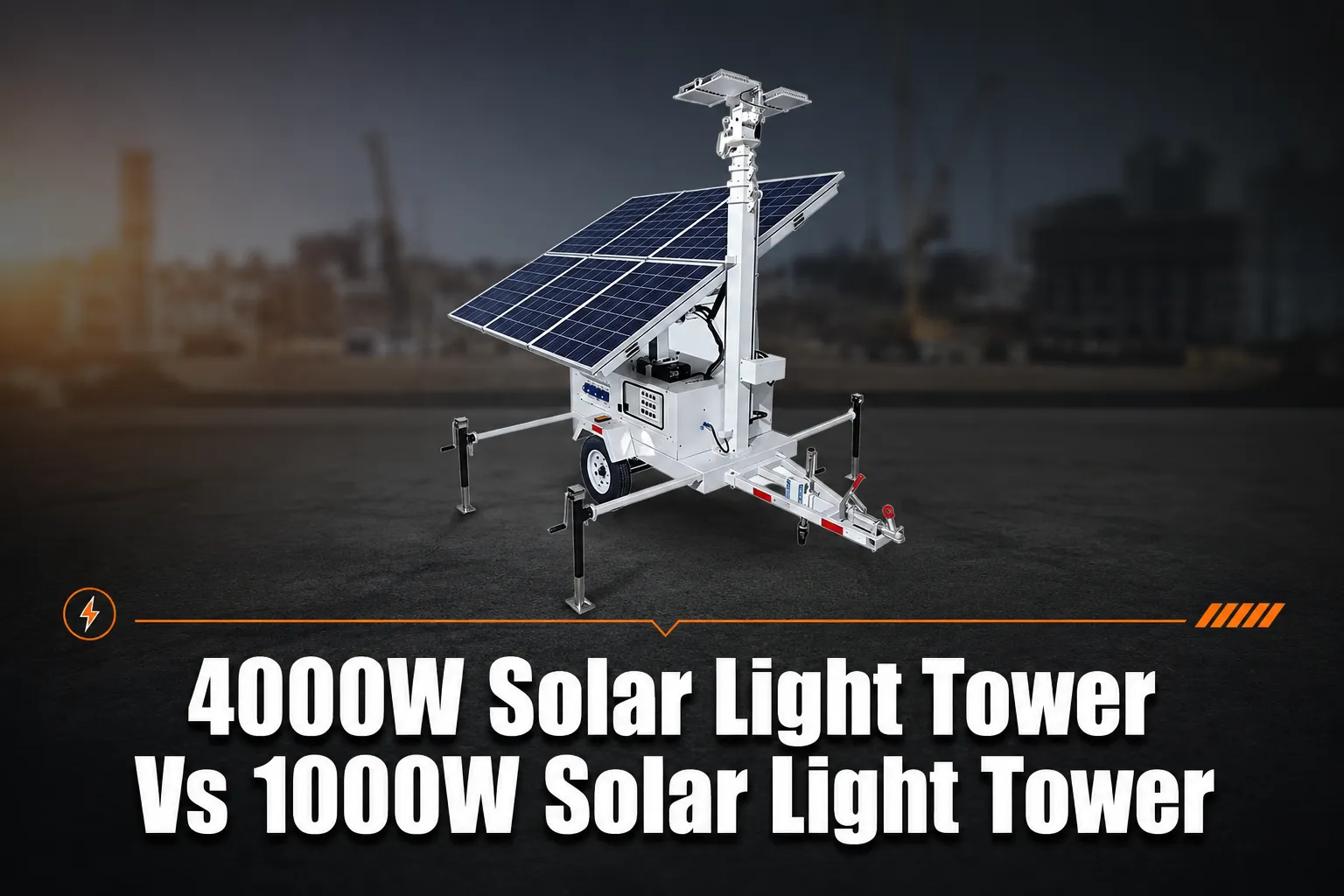
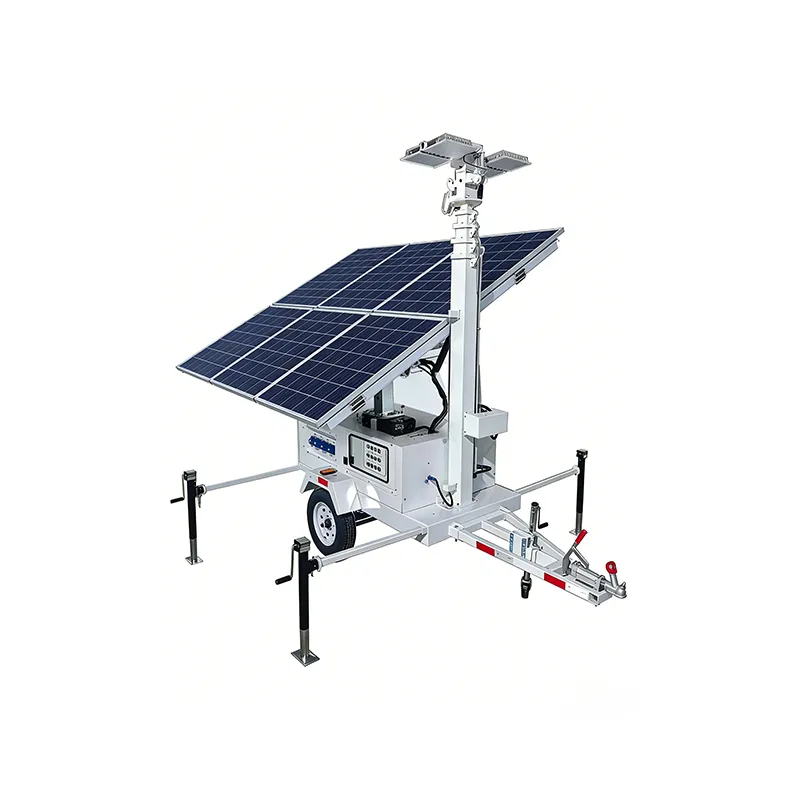
A 1000watt solar lighting tower is a mobile solar-powered lighting unit consisting of solar panels, batteries, and power-efficient LED floodlights. A solar lighting tower is designed to provide an effective source of light without the use of an external power source such as a generator or electric power line. The typical solar lighting tower consists of a telescopic light pole, adjustable floodlighting, solar battery charging system, battery, controller, and towable or mobile base.
The biggest attribute of a 1000watt solar lighting tower is balanced light output. It provides enough light for a wide variety of commercial and industrial applications while remaining practical in terms of size, cost, and energy consumption. When searching for a 1000 watt light tower for use where noise, maintenance, and fuel consumption are important factors, it is an ideal piece of equipment.
What is a 4000W Solar Light Tower?
A 4000W Solar Light Tower has been designed for heavy-duty illumination and larger areas. It is supplied with stronger, more powerful LED fixtures as well as more batteries, higher-capacity solar panels, and stronger masts. Because of the significantly greater output of light from a 4000W system compared to a 1000W system, the 4000W Solar Light Tower will illuminate a much larger area where safety, visibility, and productivity depend on adequate illumination.
However, in addition to producing greater amounts of light, 4000W systems also require larger amounts of solar energy input to produce sufficient power for a longer period at night. Therefore, the design of the system is extremely important. Should either the solar panels or battery storage be too small, there will be insufficient energy available for the required hours of operation, particularly during bad weather or winter months.
Brightness, Illumination, Coverage, and Visual Accessibility of Light
While various buyers may consider only watts as a way to compare the types of solar light towers that meet their needs, this does not give the complete picture. The overall efficiency of the LED fixtures used, lumen output, beam angle, mounting height, lens design, and site design all contribute to actual performance. An efficient and well-designed 1000W LED solar light tower may outperform a poorly designed, inefficient, higher-wattage system.
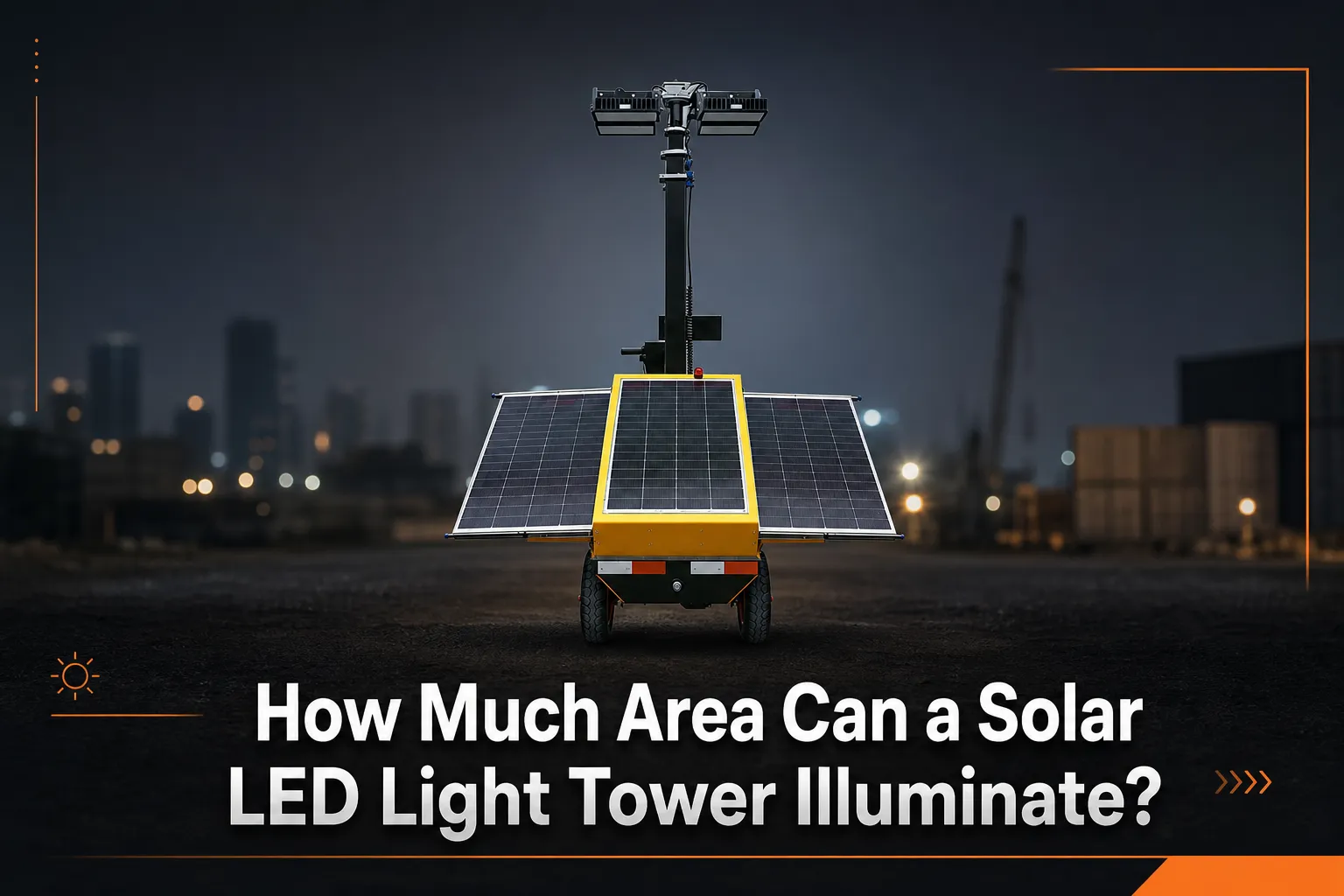
A 1000W Solar Light Tower can provide a high level of illumination in small parking lots, temporary security checkpoints, agricultural yards, maintenance areas, and small construction sites. When focused light is necessary rather than widespread illumination, using a 1000 watt solar light tower may be best.
A 4000W Solar Light Tower is more appropriate in cases where larger areas require high illumination. Higher levels of illumination available from powerful light towers can help ensure safe working conditions and improve production efficiency on large construction sites, mining operations, highways, logistics yards, and other demanding work areas.
Power System Differences: Solar Panels and Battery Capacity
As a light tower is designed with increased wattage, the associated power systems, including the solar panel array and battery storage, will also be larger. A 1000W solar light tower needs less battery capacity and fewer solar panels, making it easier to charge and more practical for many temporary lighting needs.
When using 4000 watt lights, there is a significantly greater amount of battery capacity and a larger number of solar panels necessary to provide an equivalent duration of operation compared with a 1000 watt light. Thus, larger equipment size, longer charging time, and higher cost will also be associated with a 4000 watt unit versus a 1000 watt unit.
If a light tower is to operate for 10 hours each night, a 1000 watt lighting system will typically need around 10 kWh of usable energy before system losses. However, to achieve that same operation duration, a 4000 watt lighting system will typically need around 40 kWh before system losses. Energy reductions can be aided by dimming controls, motion sensors, and scheduled operation.
Versatility of Tower Usage
If your project involves frequent relocation of the lights, then a mobile 1kW solar light tower is generally easier to move around due to its smaller size, lighter weight, and quicker setup time. This is beneficial to rental fleets, emergency response teams, road repair crews, and companies that provide temporary event lighting services.
A 4kW solar light tower can also be mobile, but due to the larger solar panel system, battery bank, and tower frame, it will generally be larger and heavier, requiring additional space for setup and more careful consideration for deployment. If the solar light tower is being used for long periods of time at the same location, this will likely not be an issue. However, those that may move the lights on a daily basis will typically prefer the mobility of a 1kW tower.
Cost Comparison – Initial Investment Versus Long Term Value
Once you factor in initial purchase price, shipping, maintenance, and deployment costs, a 1kW light tower will generally have a lower overall cost compared with a 4kW light tower, as there are fewer components and a smaller energy storage system needed to support the 1kW tower. If an end user requires multiple light towers placed in multiple small areas, purchasing multiple 1kW towers will usually provide better lighting flexibility than purchasing one large 4kW tower.
A 4kW solar light tower typically requires a greater initial cash investment. However, for large projects with multiple areas needing illumination, it may be cost-effective to use a smaller number of larger solar light towers instead of more numerous smaller ones. In determining value, end users should not base their decision solely on the initial acquisition cost. It is crucial to take the full cost of ownership into account when evaluating solar lighting solutions. Fuel savings, reduced maintenance costs, battery replacement, transportation costs, labor, and project productivity all contribute to the total cost of ownership.
Both solar solutions significantly decrease operating costs in comparison to diesel-powered towers. Without having to use fuel for operation, there are also fewer maintenance requirements, no need for oil changes, and much lower sound levels than diesel-powered lights. Over time, these savings can become beneficial, especially for businesses that operate several lights.
What Type Of Applications Could A 1000W Solar Light Tower Be Used For?
A 1000W solar light tower works well for jobs requiring dependable lighting without requiring an excessive amount of light or using too much energy. Common uses include temporary work zones, municipal maintenance, entrances to events, outdoor storage areas, farms, remote security points, and small-scale construction projects.
A 1000 watt solar light tower is also a good option in areas that are subject to noise restrictions. Because a solar light operates silently, it is ideal for use in residential construction areas, utility repairs done at night, parks, schools, hospitals, and urban areas where complaints may occur because of diesel generator noise.
For many jobs, there is a good balance of brightness, runtime, mobility, and cost using a 1000 watt light tower. If your lit area is moderate sized and you want an efficient solution to provide off-grid lighting, then the 1000 watt solar light tower is usually one of the best options available.
What Type Of Applications Could A 4000W Solar Light Tower Be Used For?
A 4000 watt tower is designed for applications where high light output is very important. Solar light towers of this class are often utilized for large construction sites, large mines, seaports, highways, railroads, oil and gas locations, and large outdoor events, as well as for public safety during emergencies.
If worker safety needs a high degree of visibility, then the added cost of using the higher wattage tower may be justified. A high-powered solar light tower can help eliminate blind spots, improve the awareness of an operator’s surroundings, and support productive out-of-hours operations.
Before purchasing, the buyer should ensure the solar charging capacity of the solar light towers meets the needs of the working environment. If the area gets relatively little sun, many cloudy days, or extended winter nights, a hybrid solar light tower with alternative backup charging may be the better solution.
Key Factors to Consider Prior to Purchasing a Solar Light Tower
Before selecting either the 1000W or the 4000W solar light tower, the buyer should establish what the actual lighting need for the job is instead of focusing only on rated power. The supplier should be able to provide lighting layouts, estimate runtimes, provide battery specifications, and calculate the charging requirements based on the location of the project.
Here is a list of important factors that should be evaluated prior to the purchase of a solar light tower:
- Illumination requirement of work area
- Square foot area needing lighting
- Average hours of operation each night
- Average sunlight hours available at project location
- Battery type and size and expected lifespan of battery
- Solar panel wattage and ability to charge
- Mast height, wind rating, and stability of trailer
- LED lumen rating, beam angle, and adjustable lamp head
- Need for smart controls, timer, sensor, or remote monitoring
In addition to the factors above, it is also a good idea to verify that your solar light tower meets applicable safety and electrical codes. A mobile solar lighting solution must be durable for outdoor use. The structure must be sturdy and weather tolerant, and it should also have a simple means of access for maintenance.
How to Decide: 4000W or 1000W?
If you are using towers for small to medium projects that are moved around often and need to be cost-effective, 1000W units may be more suitable than 4000W units. They are easier to deploy and charge, and more economical for general-purpose temporary lighting.
If you are lighting an extensive area with a substantial amount of equipment, or if you are required to meet strict nighttime safety standards, you would be better off with 4000W towers. They offer much more light, and in some cases, you can replace several smaller towers with one 4000W tower.
For some projects, a larger or smaller single tower may not be as effective as several towers of both wattage levels working together. A cluster of smaller 1000W towers produces fewer shadows and creates more uniform light across irregular areas. A 4000W tower might be advisable for one broad central area, while 1000W towers can be used in entranceways, storage places, or secondary work areas.
FAQs
How many watts is the ideal Solar Light?
The correct answer to this question depends on the usage area. If you use solar lights for pathways, small outdoor spaces, or security lighting, you may need much lower wattage solar lights. A 1000W solar light tower will typically provide adequate illumination for mid-sized commercial and industrial spaces, while locations with larger coverage areas would do well with a 4000W solar light tower instead. The main objective is not to simply choose the one with the highest wattage, but to find the right combination of lumen output, battery size, solar recharge, and runtime.
Are solar towers efficient?
There are several components involved in making solar light towers an efficient solution. The use of high-quality LED fixtures, MPPT solar controllers, properly sized batteries, and compatible solar panels is important. Compared with traditional metal halide lamps, LED lights are far more efficient at converting energy into usable light. However, there are still other variables that affect overall efficiency, such as the amount of sunlight available, battery health, fixture design, and whether smart dimming or timing functions are used.
What are the benefits of using a solar tower?
Benefits of using a solar tower include no fuel consumption, quieter operation than other forms of power generation, lower maintenance, fewer emissions, and off-grid flexibility. A solar-powered lighting tower is an excellent solution if your worksite is far away from a grid power supply or if getting diesel fuel delivered to your location is costly. Providing a reliable source of light after dark also makes solar towers desirable compared with diesel generators because they help create safe worksites without noise and fumes.
Can I run a 1000W solar light tower all night long?
A 1000W solar light tower should be able to run all night depending on battery size, how well that battery was charged by the sun during the day, how efficient the LED lights are, and how the lights are operated. If you need the tower to run for ten hours or longer, you will also need to size your battery system accordingly. Dimming and timing functions can also help increase how far into the night a solar light tower will run.
Is a 4000W solar light tower necessarily better than a 1000W model?
A 4000W solar light tower provides more power; however, that is not the only reason why you might select this option. If your working area does not require this level of power, then you may not want to purchase a larger, more expensive unit than what you need. If you only need something for light-duty or short-term use, then a 1000W solution could be much better from both an efficiency and cost standpoint.
When evaluating the differences between a 4000W solar light tower and a 1000W solar light tower, the most important things to keep in mind are your site’s size, how brightly you will require it to be illuminated, how long the lights will need to run on a single charge, how portable they need to be, and how much budget you have available. Buyers looking for flexibility, efficiency, and affordability should consider purchasing a 1000W solar light tower for medium-duty applications. If you need maximum light coverage and bright illumination for a larger high-demand site, a 4000W solar lighting tower would work best. When purchasing your solar light tower, make sure you review your lighting plan, battery size, solar panel layout, and expected usage hours so that you know it will function reliably under actual operating conditions.